
BodaData Strengthens Southeast Asia Expansion with Localized Strategy and Ecosystem Collaboration
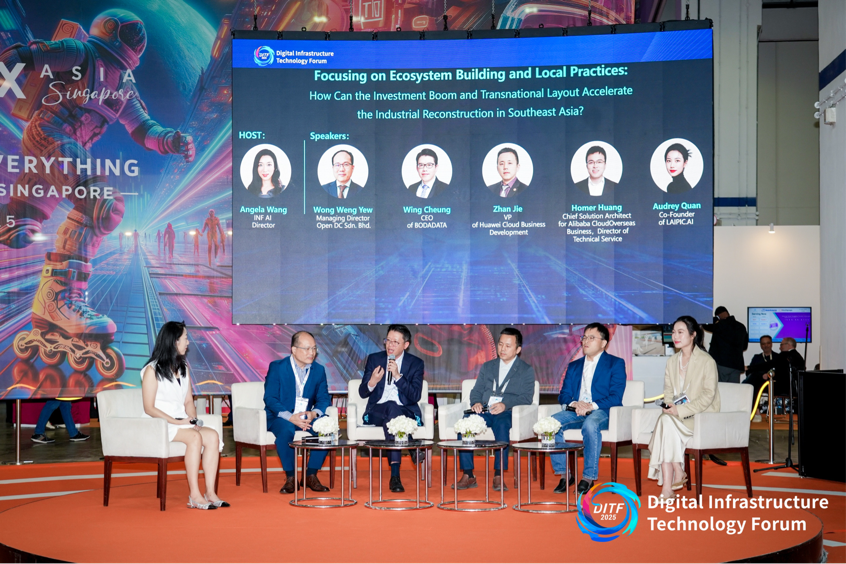
BodaData took center stage at the China–Southeast Asia Digital Infrastructure Cooperation Forum, held in Singapore. Company Chairman Mr. Wuwang Yu, CEO Mr. Wing Cheung, and Board Secretary Mr. Eric Chan were invited to participate. As part of the program, CEO Wing Cheung joined a high-level roundtable discussion titled “Ecosystem Co-Building and Localization: How Investment Waves and Multinational Expansion Are Reshaping Southeast Asia.”
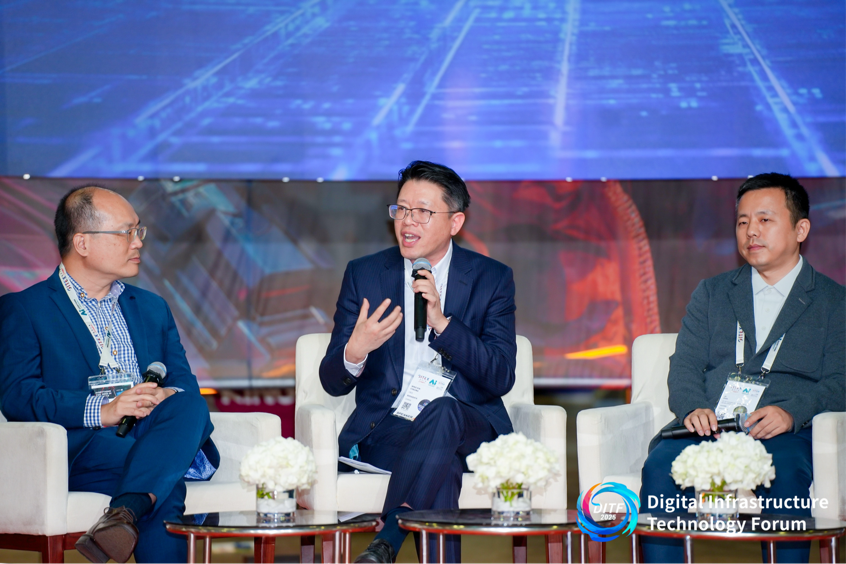
Drawing on BodaData’s deployment of its hybrid data center in the Philippines, Wing shared practical insights on how multinationals can build sustainable competitiveness in Southeast Asia by balancing strategy, operations, and local practice.
From Mission to Model: Full-Lifecycle Strategy Anchored in Purpose
Wing emphasized that for companies entering Southeast Asia, the first step is to clarify their mission: “Short-term value creation and long-term operational sustainability must go hand in hand.” He noted that companies must determine whether their primary goal is to deliver quick returns for investors or to build a stable, dividend-generating long-term presence—this choice fundamentally shapes capital allocation, business priorities, and partnership strategies.
In the project of the Philippines, BodaData’s goal is “serving local demand while evolving into a regional hub.” As the second-most populous country in Southeast Asia, the Philippines offers sufficient demand to support standalone hybrid data center operations. Moreover, with 20–30 new subsea cable landings planned over the next few years, the country is well-positioned to become a bridge between Southeast Asia and China.
This “one country, multiple capabilities” positioning requires flexible operational models. “If the model is ‘one country, one market,’ it must rely heavily on local teams and supply chains. If the model is ‘one country serving multiple markets,’ it needs to integrate regional talent and cross-market resources,” Wing explained.
BodaData has adopted a “Chinese knowledge export + localized operation” approach: leveraging the technical strengths of partners to build high-spec facilities, while collaborating with local telecom operators to ensure deep integration into the regional digital ecosystem. “Ultimately, choosing an operational model is about balancing efficiency and risk,” Wing added, noting that companies must adapt their strategies to the maturity of local regulations, supply chains, and market needs.
Localized Execution: From Infrastructure to Talent Development
Southeast Asia’s market fragmentation presents added complexity. Wing pointed out that countries like Indonesia and the Philippines are transitioning from traditional colocation to cloud computing, while Malaysia and Thailand are beginning to explore AI-powered, high-density computing. “Companies must assess each market’s maturity precisely to avoid premature deployment or lagging adaptation,” he warned.
To address this, BodaData has implemented a “phased adaptation” strategy in the Philippines: Phase 1: Focus on basic compute and cloud services to meet immediate digitalization needs. Phase 2: Introduce AI-driven intelligent operations (AIOps) to boost efficiency. Phase 3: Integrate with regional subsea cable networks to expand cross-border connectivity.
This approach avoids the risks of a “one-size-fits-all” tech stack and offers clients a pathway for gradual digital upgrades.
Talent and compliance are also vital to localization. Southeast Asia faces a shortage of technical professionals—especially in data center design and AI operations. To address this, BodaData follows a “dual-track” model of HQ enablement and local development: Deploying experienced Chinese teams to establish the technical foundation. Partnering with University of Makati to offer customized training for local engineers. A joint China–Philippines management team was also formed to uphold global operational standards while empowering local teams with agile decision-making. “Cultural differences are not barriers—they’re sources of innovation,” Wing noted, adding that this approach reduces costs while accelerating team localization.
In terms of compliance, BodaData extends its modular design philosophy to legal and operational frameworks. For example, to meet the requirements of the Philippines’ Data Privacy Act, the company deploys customizable security protocols and localized data storage solutions. “Compliance is the foundation of trust,” Wing emphasized, adding that this strategy has helped the company gain both government and enterprise recognition in the local market.
Ecosystem-Driven Growth: From Supply Chains to Sustainability
“Southeast Asia’s digital future can’t be built in isolation,” Wing said. Deep collaboration across the value chain is key to overcoming regional fragmentation. BodaData’s three-pronged approach to ecosystem building includes: Co-developing technology alliances with partners like ZTE and Huawei to share innovations in AIOps and liquid cooling; Integrating local suppliers to shorten procurement cycles and reduce supply chain disruption; Collaborating with governments and industry organizations to promote green policy implementation.
In the Philippines, the Hybrid Data Center was designed from inception to include solar power systems, and BodaData partnered with local NGOs to conduct digital literacy training in the surrounding community. “Green transformation isn’t a cost—it’s a competitive advantage,” Wing asserted.
The center has become a regional benchmark for intelligent infrastructure and is now attracting cross-border partnership inquiries from multinational clients. “The Philippines AI Data Center is just the first piece of BodaData’s regional puzzle,” Wing concluded. The company aims to build a full-stack infrastructure network spanning AI compute, cross-border connectivity, and vertical solutions.
He emphasized that Chinese companies’ strengths in tech iteration and scaled execution can complement Southeast Asia’s localized demand—“The key is to enter with humility, let global tech resonate with regional insight.”
Empowering the Region Through Partnership
As Southeast Asia accelerates its digital transformation, BodaData is positioning itself not just as an infrastructure provider, but as a digital ecosystem enabler.
Through technology sharing, ecosystem collaboration, and co-created value, BodaData is working hand-in-hand with Southeast Asian partners to shape a smarter, more inclusive digital future.
推荐资讯
more- 以“AI”为桥,菲律宾一号智算基地共赴中国-东盟魅力之约
- 博大数据亮相2026云栖大会:以定制化智算服务承接AI规模化需求
- 跨界融合共创,AI+产业创新实践之旅走进博大数据前海一号智算基地
- 聚焦算网融合新趋势,博大数据参与2026算力网发展大会
- 博大数据参加2026中国算力大会:让算力更好支撑智能,让智能真正转化为生产力
- 聚焦数智新未来,博大数据亮相第十六届智慧城市与智能经济博览会
- 《算力中心服务商分析报告(2026年)》发布 博大数据多维能力获行业认可
- 锚定三个价值、推动六大变革、构筑十大能力,博大数据加速融合算力布局
- 锚定三个价值、推动六大变革、构筑十大能力,博大数据加速融合算力布局
- 热烈祝贺富邦银行(香港)深圳分行开业,博大数据携手共启湾区金融新篇章