Data Center Asia 2026: Rethinking Infrastructure Transformation in the AI Era — BodaData’s Li Ya Shares New Perspectives on Computing-Energy Synergy
On July 8–9, 2026, Data Center Asia 2026 was held at the Hong Kong Convention and Exhibition Centre. The summit brought together industry leaders from the global data center, AI computing, and energy sectors to explore the transformation and future of digital infrastructure in the AI era. At the summit’s main forum, Li Ya, Senior Vice President of BodaData, engaged in an in-depth dialogue with Liu Ziye, Executive President of Guoxia Technology, on the topic of “Powering the AI Era: The Convergence of Computing Infrastructure and Energy Innovation” The two speakers shared forward-looking insights on the evolution of the AI infrastructure landscape, new system-level economic logic, and the development of collaborative ecosystems.
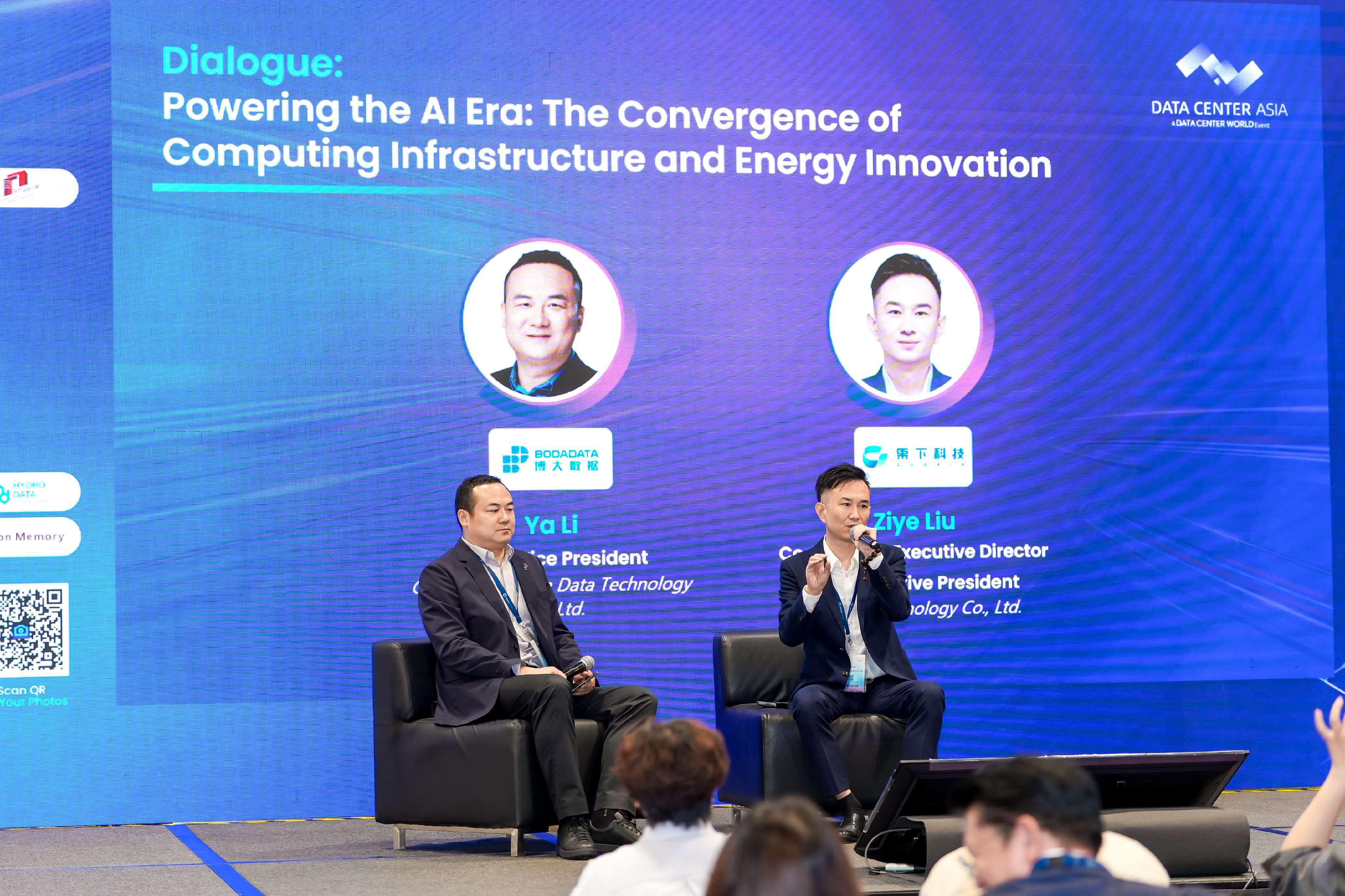
From Compute Resources to the Foundation for AI Innovation
How AI Is Reshaping Digital Infrastructure
At the beginning of the discussion, Li Ya noted that over the past two years, generative AI has surged into the mainstream following the rise of ChatGPT, while open-source large language models such as DeepSeek have accelerated the deployment of AI applications across industries. AI is now entering virtually every sector at an unprecedented pace. From an infrastructure perspective, however, AI is changing more than just the application layer—it is fundamentally reshaping the underlying logic of digital infrastructure.
Looking back over the past two decades, every wave of technological transformation—from the Internet and mobile Internet to cloud computing—has driven infrastructure upgrades. However, the current AI transformation differs significantly from the previous cloud computing era. Cloud computing primarily addressed resource pooling, elastic computing, and large-scale deployment, with computing centers focused on standardization, scale, and resource sharing. In the AI era, the industry is facing an explosive increase in computing demand driven by AI training and inference. Meeting this demand requires not only more GPUs, but also high-speed networks, greater power capacity, more efficient thermal management, and more stable and intelligent operations.
Li Ya particularly noted that this shift is also becoming increasingly evident at BodaData. In previous years, most of BodaData’s customers came from sectors such as the Internet, finance, and cloud computing. Today, an increasing number of customers are focused on AI training, AI inference, and large-model applications, and the questions they ask have changed accordingly. Against this backdrop, the biggest challenge for AI infrastructure is no longer individual capabilities, but system-level capabilities. “An AIDC in the AI era is no longer simply a facility where servers are deployed. It is a complex system composed of computing, power, cooling, networking, security, operations, and other interconnected systems. Any single component can affect the efficiency of the entire AI cluster,” he said. He noted that while large-scale GPU clusters are now being built across the industry and much attention is focused on GPU performance, what ultimately determines whether these GPUs can deliver their full value is not the chips alone.
In response, BodaData has continued to strengthen its capabilities in high-density computing capacity, engineering delivery, and energy-efficiency coordination across multiple AIDC infrastructure projects. For example, BodaData Hebei Langfang No. 2 AIDC Base was developed to meet the high-density computing demands of the AI era. The project was built in accordance with China’s Class A computing center standards and international Tier III+ standards. It currently provides customized services for a leading Internet company and has optimized its power architecture around the requirements of AI training and high-density GPU clusters for power efficiency, stability, and sustainability, enabling power resources to be converted into effective computing capacity more efficiently. BodaData Shenzhen Qianhai No. 1 AIDC Base covers more than 50,000 square meters and provides highly customized, high-power infrastructure services for leading financial institutions, demonstrating BodaData’s capabilities in resource capacity and system delivery for AIDCs.
Addressing the integration of computing and energy, Liu Ziye, Executive President of Guoxia Technology, shared his observations from the perspective of energy asset operations. He noted that as the scale of AIDCs rises toward the hundred-megawatt level, power assurance has evolved from a purely physical construction issue into a core infrastructure system. “When the power fluctuations of an AIDC become significant enough to affect the stability of a local power grid, energy is no longer a passive supply—it becomes an intrinsic variable that determines operational efficiency.” Liu Ziye believes that the key to addressing this challenge lies in embedding an operations-oriented mindset throughout the entire process—from incorporating energy into system design at the project planning stage to continuously optimizing energy efficiency throughout the asset lifecycle through intelligent technologies. “What customers ultimately need is long-term, stable, and quantifiable green energy returns. This shift in thinking—from asset construction toward value-oriented operations—is an important trend now emerging across the industry.”
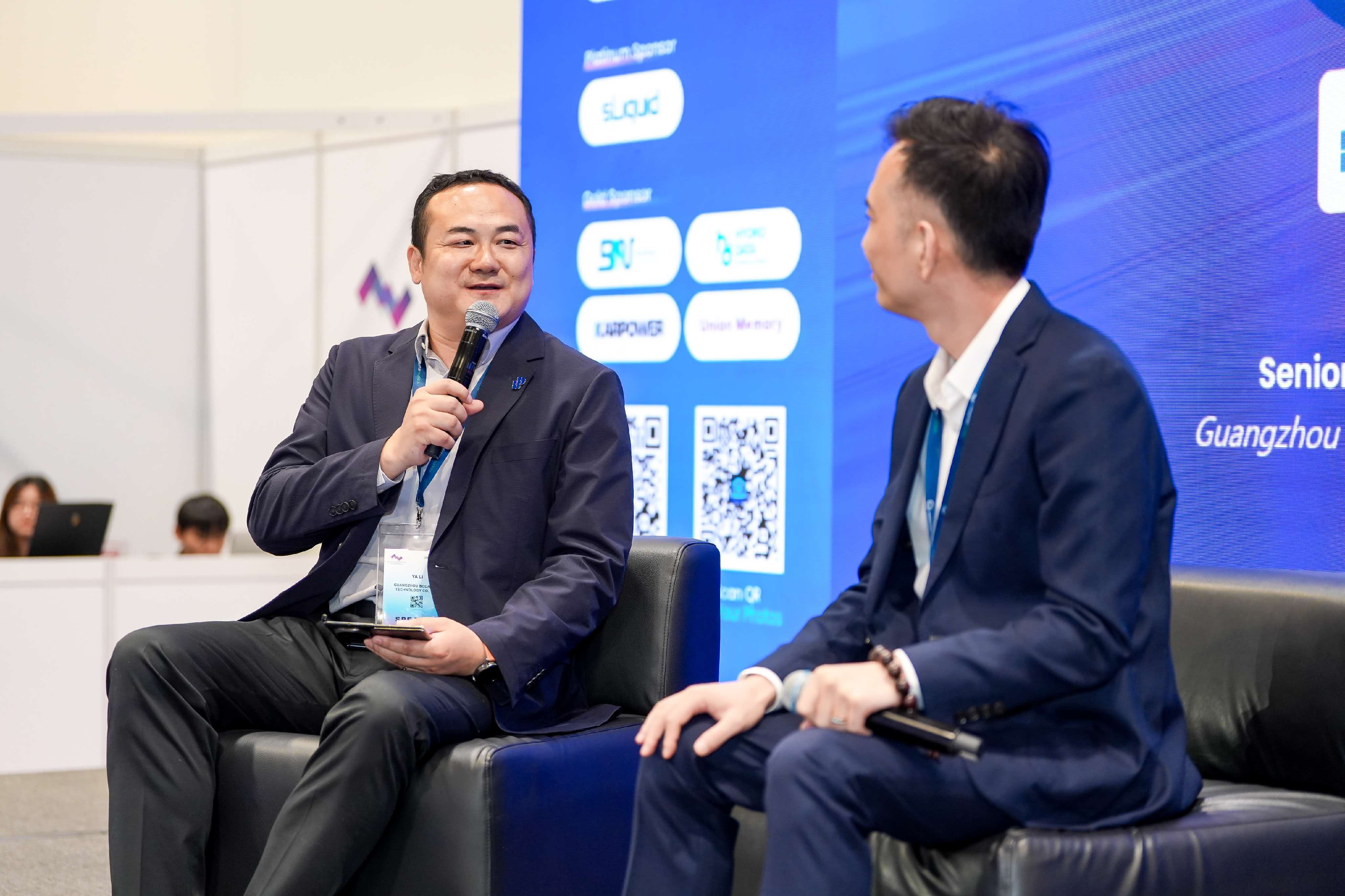
From Competition on Individual Capabilities to Ecosystem Collaboration
AI Infrastructure is Entering a new Era of Ecosystem Co-Creation
AI infrastructure is evolving from single-point competition to competition over system-level capabilities, and ultimately toward ecosystem collaboration. Li Ya pointed out that four core capabilities will become increasingly important in the future AI infrastructure ecosystem: computing capabilities; energy and power system capabilities; networking and software orchestration capabilities; and operational and intelligent management capabilities.
“When capabilities are fragmented and systems are disconnected, efficiency will inevitably be lost to the cost of coordination. Therefore, the competitiveness of AI infrastructure in the future will ultimately come down to system efficiency.” Li Ya emphasized that computing companies are extending into energy capabilities, energy companies are expanding into digitalization and intelligence, cloud providers are moving deeper into the infrastructure layer, while operators and equipment providers are also becoming part of an increasingly integrated ecosystem.
Liu Ziye shared a similar view on ecosystem collaboration. Drawing on his experience in the energy sector, he identified three prerequisites for achieving such collaboration: first, computing centers should incorporate energy as a system-level element from the planning stage, rather than treating it as an isolated physical infrastructure consideration; second, organizations must be capable of continuously optimizing energy assets as operational assets; and third, data must be used to break down information barriers between the computing and energy sides.
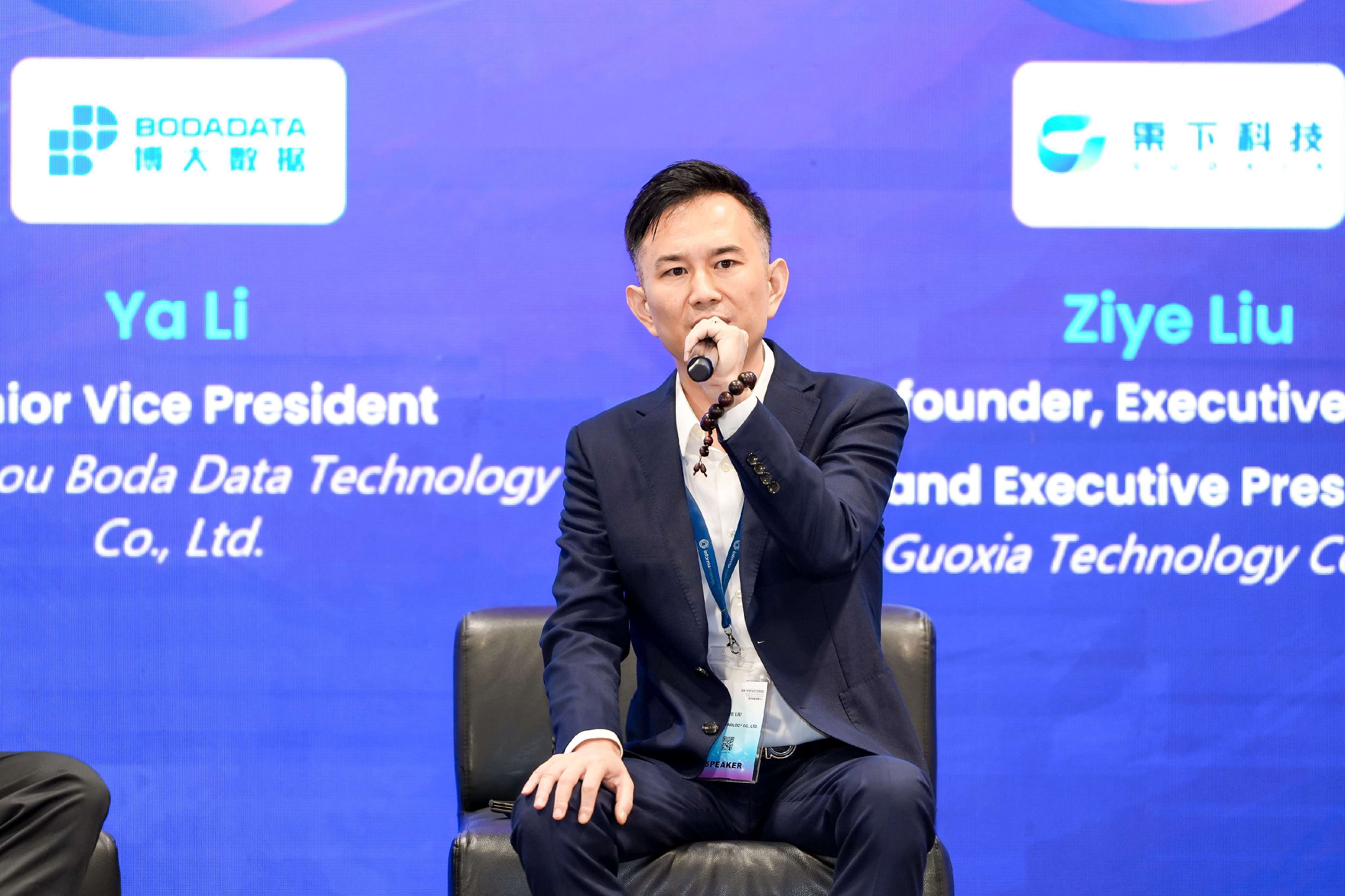
As a leading integrated computing infrastructure service provider, BodaData has deployed comprehensive integrated computing resources across the Beijing-Tianjin-Hebei region, the Yangtze River Economic Belt, the Guangdong-Hong Kong-Macao Greater Bay Area, the Chengdu-Chongqing region, the Philippines, and other markets. At this year’s summit, BodaData showcased its AI infrastructure solutions and global footprint, working with industry partners to explore new possibilities for infrastructure development in the AI era.
In concluding the dialogue, Li Ya noted that AI is reshaping the computing ecosystem, while the energy transition is reshaping the energy ecosystem—and the two are now moving toward deeper integration. He looks forward to seeing three developments take place over the coming years: system-level collaborative design between computing and energy; a shift in infrastructure from “construction-oriented” to “operations-oriented”; and a transition from single-point competition to ecosystem co-creation. The deep integration of AI foundation models and the computing industry represents a profound transformation with far-reaching implications for efficiency, innovation, and sustainable development. BodaData looks forward to working with partners across the industry to accelerate this transformation.
推荐资讯
more- 博大数据亮相2026香港金融科技周,以智算底座作答“AI+金融”
- 以“AI”为桥,菲律宾一号智算基地共赴中国-东盟魅力之约
- 博大数据亮相2026云栖大会:以定制化智算服务承接AI规模化需求
- 跨界融合共创,AI+产业创新实践之旅走进博大数据前海一号智算基地
- 聚焦算网融合新趋势,博大数据参与2026算力网发展大会
- 博大数据参加2026中国算力大会:让算力更好支撑智能,让智能真正转化为生产力
- 聚焦数智新未来,博大数据亮相第十六届智慧城市与智能经济博览会
- 《算力中心服务商分析报告(2026年)》发布 博大数据多维能力获行业认可
- 锚定三个价值、推动六大变革、构筑十大能力,博大数据加速融合算力布局
- 锚定三个价值、推动六大变革、构筑十大能力,博大数据加速融合算力布局